Strangers on transit
2026
design concept
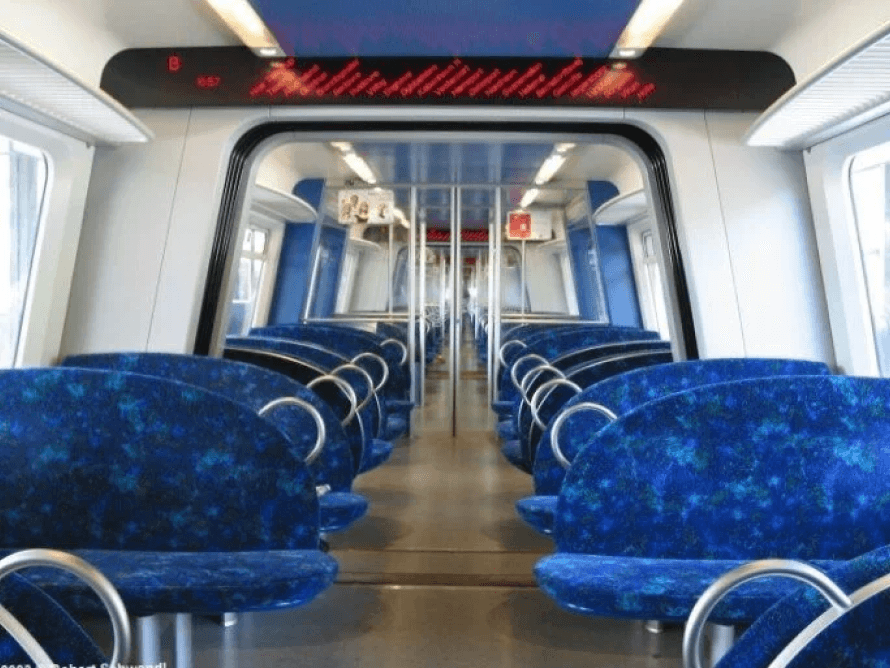
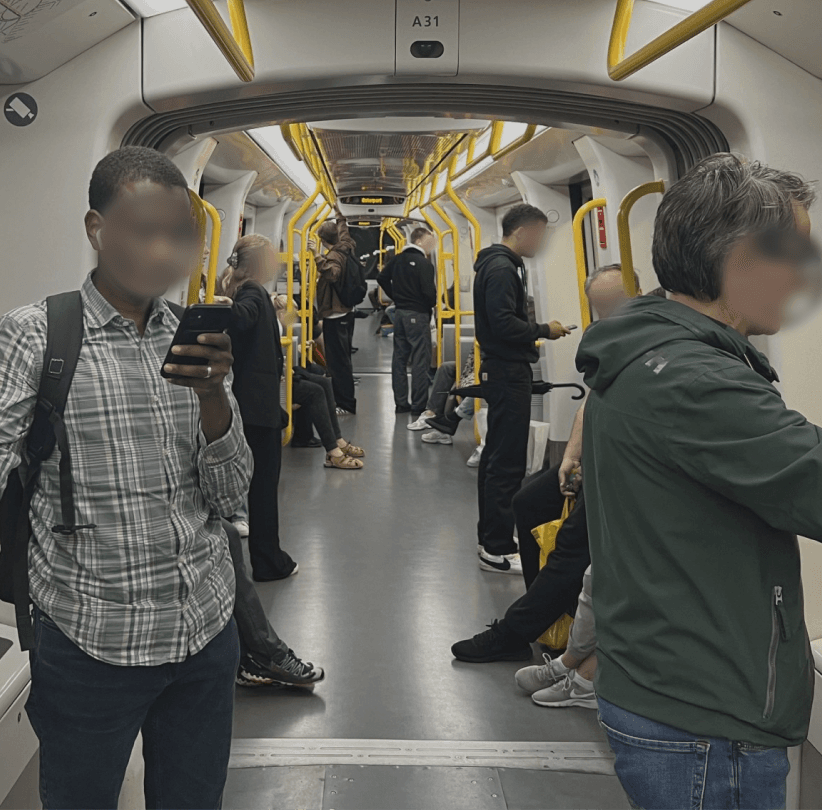
Public transport is a space where passengers are neither working nor resting, and many fill the void with their phones or daydreaming.
I saw it as a site for something more meaningful and playful, which is why this project explores how play can open up the liminal, in-between state of public transport, while experimenting with how play can be used as part of design processes.
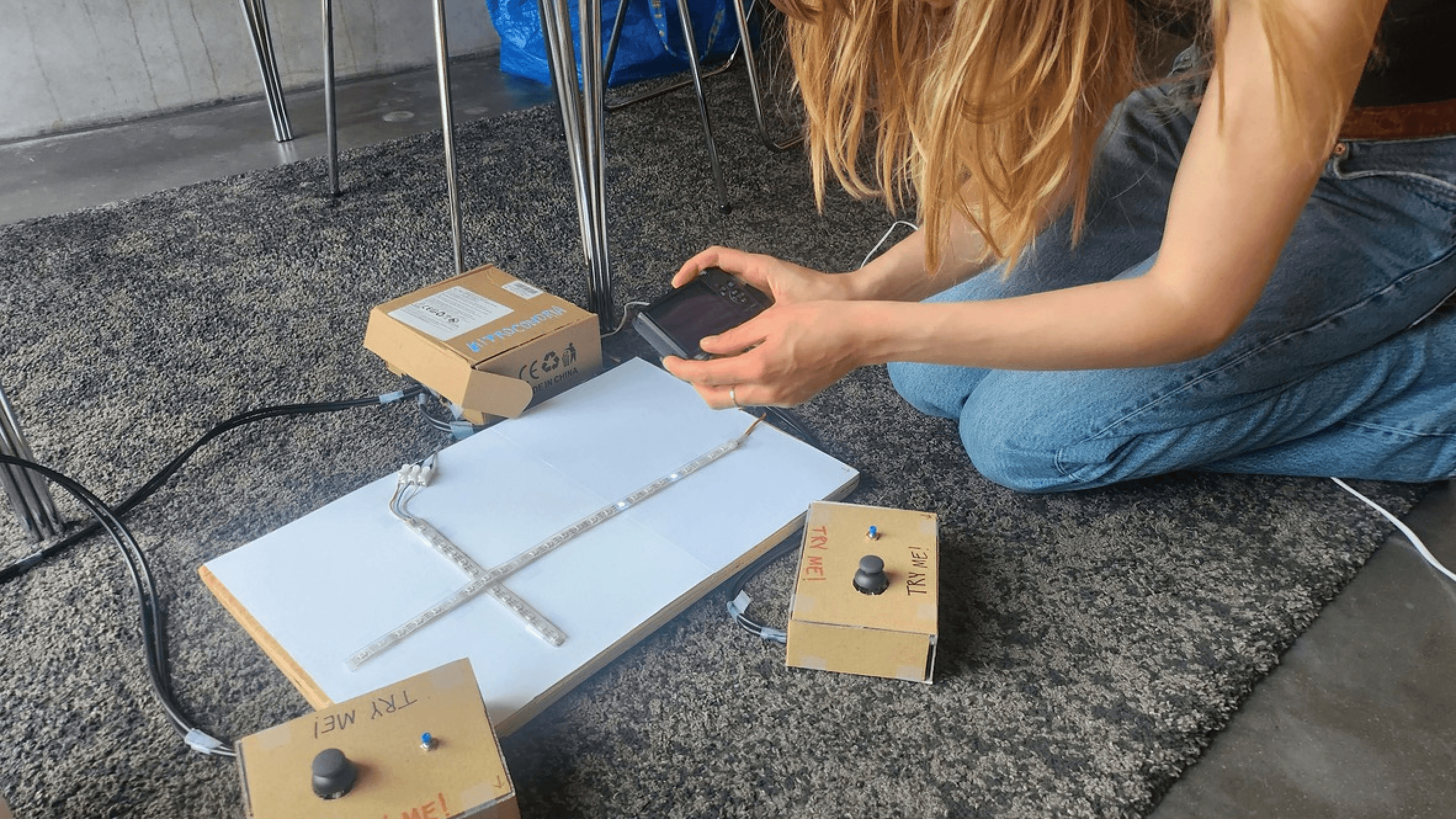
I ended up designing an interactive LED system, where passengers can interact with each other indirectly. From your seat, a joystick lets you steer a small light, or "character," along LED strips that wrap around the vehicle's architecture. Along the way you can blink at, chase, and high-five the lights of fellow passengers.
motivation
What motivated this project was two questions:
- How can play be used as a design approach?
- How can I get even the most serious person to play?
These two questions were all I started with. It was only through the design process that I came to understand why play matters and why public transport is such an interesting design space.
why play?
Most of the spaces around us are designed to make us productive. Even the time we spend waiting is optimized, filled, scrolled through. Free time, genuinely unstructured and un-owned, is rare. I find play important because it resists this. It's not productive, it's not for anything, and that's exactly why it matters to me. Play is a small refusal, a moment where we take a space back for ourselves.
and why public transport?
Third places are rare, spaces that aren't home or work, where we can just exist among others. Public transport isn't quite that either, but it might be the closest thing many of us have, the one place we're still forced to share space with the general public. So what's the point of that closeness if no one is actually present? Most of us disappear into our phones the moment we sit down, physically together, but somewhere else entirely. I wanted to see if people could be pulled back into the room they're already sitting in.
design process
Rather than plan the design process upfront, I approached the project through "revealing". This meant staying open to what emerged, instead of "enframing," which forces the material into a predetermined shape.
From academics, I am used to working through enframing, sorting the design process into categories and often following the double diamond model. I was interested in trying something different like revealing, because I wanted the process to feel like I was playing, making my own rules and following my intuition of what the next step was.
In practice, this meant starting from what motivated me, making people play, and seeing where it led me. To make people play, I needed to understand the openings and limitations of public transport. I gave a friend prompts to reflect on what play could be on public transport, then started generating ideas from her input. Eventually I came up with a concept that went through phases of adjustment, based on input from my conversations with people and things I read.
The prototype was built with an Arduino Uno, WS2812B LED strips, and custom cardboard controllers, using the FastLED library. The interaction logic in C++ was written with Claude Code.
testing
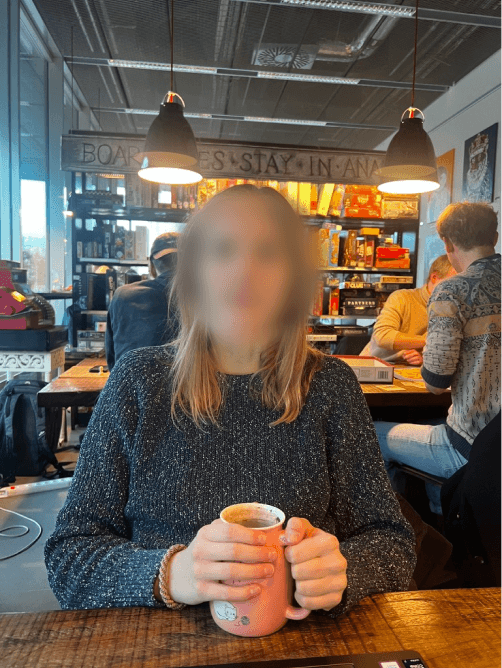
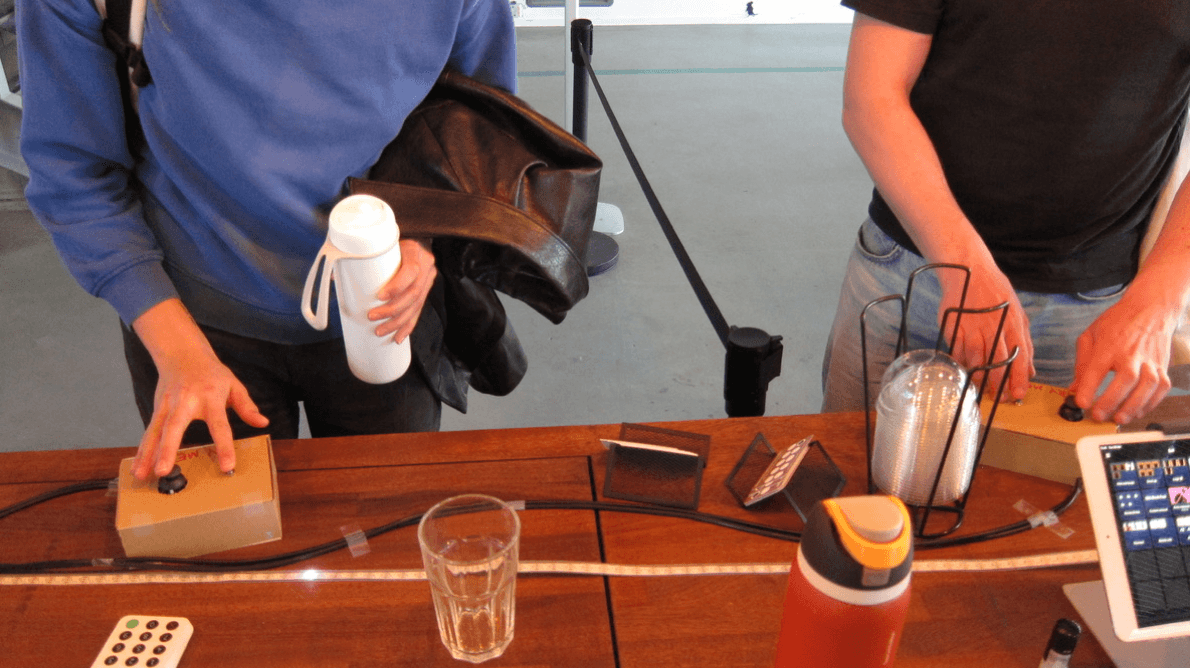
Besides smaller and less structured testing, I did one bigger test. Here I planted an upscaled version of the prototype in a student café, on the counter where people waited for their coffee, and sat in the corner to observe.
While a café does not fully represent public transport, I considered it a smaller scale waiting space, which made it more fitting for this stage of the project.
what happened?
I was really happy to see that people discovered the system unprompted and invented their own games with it, racing lights, trying to "collide," and sneaking around invisibly by holding down the button, all while interacting with strangers through it.
Many were curious, but not everyone tried it, and in general they didn't try it for long.
The tests confirmed there's real potential for playful, unplanned interaction between strangers in waiting spaces. Designing for play means designing at the edge of a space's unwritten rules, its "wiggle space."
The test showed me where the café's edges sit. Staying quiet in the queue was negotiable, and strangers ended up talking about the lights. Waiting longer for your coffee was not. When the baristas kept playing instead of serving, someone asked them to get back to it.
learnings
Working through the design process by letting openings reveal themselves, I experienced a form of creative freedom that let me approach the project with playfulness rather than control. I observed myself spending more time in conversation with the materials, and made several unplanned discoveries that turned out to be the most important ones of this project.
I discovered that play can be used as a design approach by designing the frame, rather than the behavior. I didn't script an interaction or a game with specific rules. Instead I built a stage with minimal rules, and stepped back. The moments that worked best (racing lights, sneaking around invisibly, colliding on purpose) were things people found on their own.
I also learned that getting even the most serious person to play depends on understanding the wiggle space of the design space, which is where the risk lies. Push too far and it tips into boundary work, where people defend the norm instead of playing with it. The goal isn't to break the rules of a space, but to nudge just enough that a rule becomes visible and negotiable. This also points to the downside of revealing. I am still not sure what the space of public transport allows, and a more enframed process would likely have covered that early on.