1000 rejections
2026-2027
Through Instagram, I discovered a girl trying to get rejected 1000 times. What she found was not rejection, but opportunities. I am doing the same experiment from June 2026 to June 2027.
To get rejected, I have to make asks. An ask includes everything from job and internship applications, to asking someone I admire for coffee, to signing up for something crazy.
This visualization updates every time I make an ask, showing whether I was accepted, rejected, or am still pending a response. It also shows how much fear I felt making each ask, and which area of my life it belonged to.
live data visualization
Loading rejections…
0 asks made so far
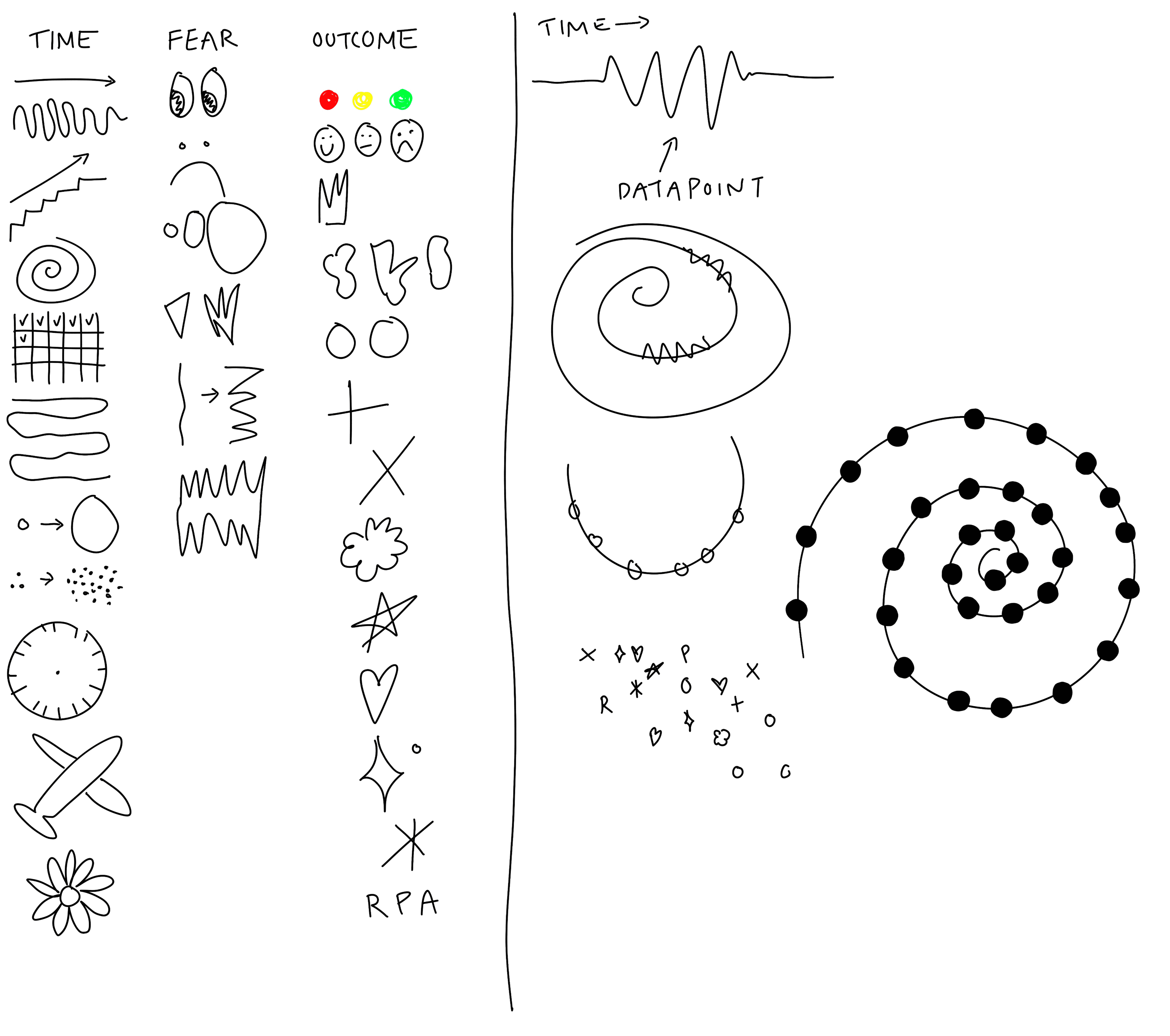
Shape = category
Color = outcome
Size = fear level
Bigger nodes are asks that felt scarier to make (1–3).
Position = sequence of asks
Each ask spirals outward from the center. #1 sits at the middle, and the spiral grows as the count goes up.
field notes
Besides the data visualization, I am collecting field notes on the go. These are my thoughts, realizations, struggles, and learnings from the experiment.
13-9-2026
Very rewarding being accepted from asks I did not expect anything from.
13-9-2026
1000/12 = around 83. I have to make 83 asks a month! I am so behind...
13-8-2026
It is kind of hard coming up with things to be rejected for.
11-8-2026
Felt unsure how small or big an ask had to be to add it to my list. Decided to add it no matter the size. Recently sent a lot of Instagram DMs for interviews for a project I am doing. Instead of combining all DMs into one ask, I have now expanded it so each has its own ask.
11-8-2026
People would rather leave me pending than reject me.
10-8-2026
Learning that you can actually just message anyone. Way less scary than it seems.
design process
The design process for this data visualization was rather simple. I wanted to visualize my journey in a simple but aesthetic way, illustrating the concepts of time, fear, and outcome. The images show my honest sketching, where I was playing with what the different elements should represent. Category came later, while coding assisted by Claude Code.